




德国Meyer Werft发布全电池动力邮轮概念Project Vision
作者: 发布时间:2026年08月14日 浏览量:79 字体大小: A+ A-
Meyer Werft Unveils Project Vision Battery-Electric Cruise Ship Concept
As European ports race to add shore power ahead of new rules, cruise lines face a clearer path to true electrification and a new battle for the best short route itineraries.
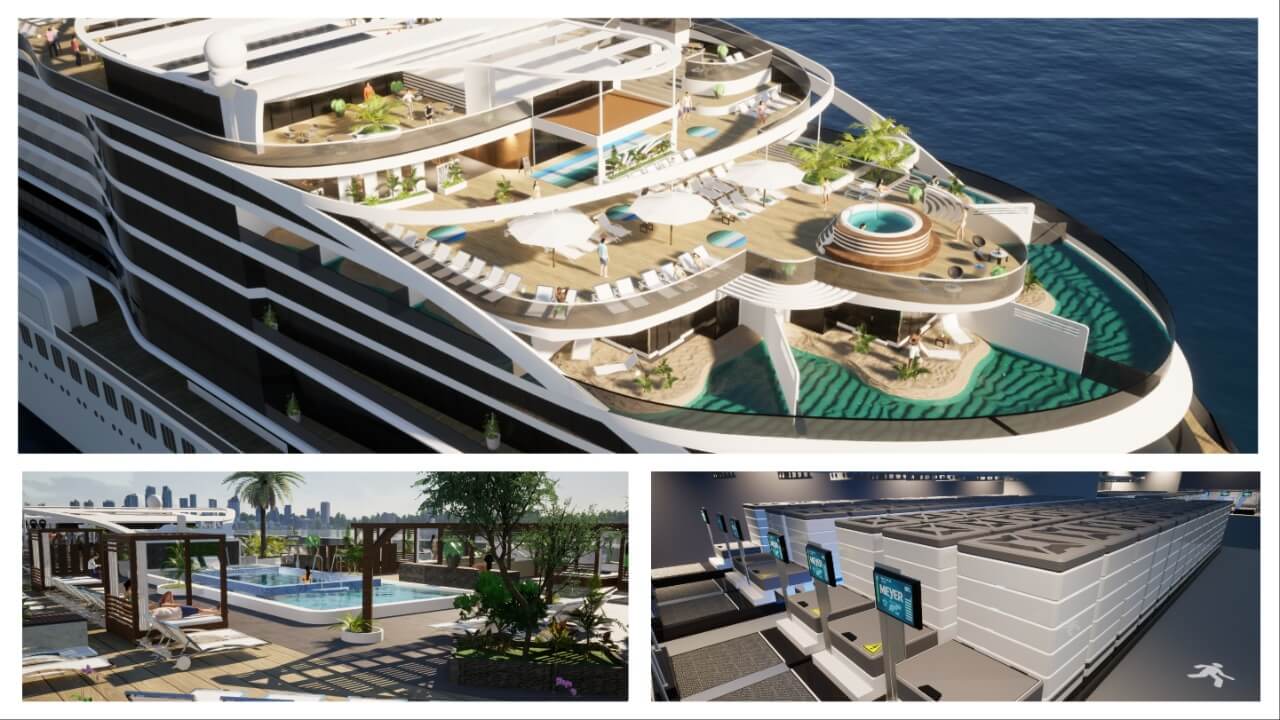
Image Credit: Seatrade Cruise News
German shipbuilder Meyer Werft has unveiled a concept for a fully battery-electric cruise ship, arguing that large passenger vessels could operate without traditional combustion engines on selected itineraries. Presented during Seatrade Cruise Global in Miami, the proposal, called project Vision, is built around a large-scale battery system from Norwegian marine battery manufacturer Corvus Energy and targets up to a 95 percent reduction in greenhouse gas emissions versus conventional marine-fuel-powered ships.
Project Vision’s scale and what the concept includes
Meyer Werft described project Vision as a concept study rather than a ship under construction, intended to show how existing technology could be applied to a sizeable cruise vessel, particularly on shorter regional routes where recharging between ports is feasible.
Tim Krug of Meyer Werft’s Concept Development Group framed the concept as an attempt to shorten the timeline for emissions reductions, saying, “We asked ourselves how we can use innovation to reduce CO2 and contribute to decarbonization not in 50 years, but much sooner.”
How an all-electric cruise ship would operate, and when hybrids come in
Meyer Werft said the concept is aimed at routes where energy demands and turnaround times make battery-only operations realistic. The shipyard cited Barcelona-to-Civitavecchia (near Rome) as an example of an itinerary that could be suited to a battery-electric operating model.
For longer voyages, Meyer Werft also outlined a hybrid configuration. In that setup, smaller generators would supplement the battery system, extending range for longer routes, including transatlantic crossings, while still reducing emissions compared with conventional propulsion arrangements.
Shore power buildout and EU rules shaping the timeline
The feasibility of project Vision, as presented, depends heavily on shoreside electrical infrastructure and the pace of regulatory-driven electrification in Europe. Meyer Werft linked the concept to the EU’s Fit for 55 climate package, which targets a reduction in greenhouse gas emissions of at least 55 percent by 2030 compared with 1990 levels, alongside a longer-term objective of climate neutrality by 2050.
Meyer Werft said newer requirements already push ships to cut fuel-related emissions and to pay for carbon output when sailing to EU ports. Separately, passenger ships will be required to connect to shore power at major European ports starting in 2030, a shift that makes port readiness a decisive factor for battery-electric cruising at scale.
In its Seatrade Cruise Global presentation, the shipyard said roughly 100 ports across Europe are expected to have charging capabilities in place by 2030 to align with Fit for 55-related demands.
What changes when a cruise ship is designed without conventional exhaust systems
Meyer Werft said removing major elements associated with large combustion engines would change the ship’s architecture. Without a conventional exhaust funnel or vertical exhaust treatment systems extending through the vessel, the shipyard said the concept could free space for additional usable area on upper decks, including a redesigned sun deck with more open views.
The concept also includes weather-protected spaces intended to support year-round operations in cooler or wetter climates typical of northern European itineraries. One example included in the concept is an indoor aqua park positioned at the stern inside a fully enclosed glass structure.
Beyond emissions, Meyer Werft tied battery-electric propulsion to onboard comfort, saying that the absence of traditional propulsion systems would significantly reduce vibration and mechanical noise across guest areas.
A potential 2031 delivery, if a cruise line orders soon
Meyer Werft said the components needed for the concept are already available and could be applied within the next decade, but the project remains a study until a cruise line commits to a build. Thomas Weigend, chief sales officer at Meyer Werft, said, “If ordered this year, we could already deliver the first ship in 2031.”
Retrofits, port digitization, and the wider push behind lower-emission operations
While Meyer Werft’s proposal focuses on a newbuild concept, industry efforts to cut emissions and modernize operations also include retrofits and port upgrades. Trade Estonia has highlighted initiatives ranging from methanol retrofit solutions to smart port systems, positioning Estonia as a contributor to changes underway across the cruise and broader maritime sectors.
Among the retrofit offerings cited by Trade Estonia, Estonian marine retrofit specialist SRC has introduced Methanol Superstorage, a solution the company says enhances capacity by 85 percent compared to traditional cofferdams, aiming to provide a more space-efficient approach for cruise ships transitioning to methanol fuel.
Other companies, including LTH Baas and Eumar Design, are working on technical integrations and lightweight interior solutions for passenger vessels. “For shipowners, the challenge is balancing compliance with evolving environmental regulations and achieving operational efficiency in a commercially viable way,” said Martin Jõeva, R&D manager at LTH Baas.
On the port side, the Port of Tallinn’s Smart Port initiative highlights how digitization can change passenger and cargo processes, including digital check-ins, automated terminal operations, and paperless documentation through Maritime Single Window solutions.
Refurbishment projects and shipyard upgrades reshaping the fleet
Separate from newbuild concepts, cruise and ferry operators have continued to invest in refurbishment programs intended to extend vessel lifespans and update onboard offerings. DataIntelo has projected the cruise ship refurbishment market will reach $9 billion by 2033.
Several shipyards have positioned themselves around this work. Damen Shiprepair has retrofitted Disney Cruise Line vessels with more efficient propulsion systems and toxin-free paint, while Drydocks World has carried out extensive projects for TUI Cruises’ fleet. Other updates highlighted include BLRT Grupp’s aluminum handrails designed to withstand maritime conditions, and Navantia’s work on battery installation on Wasaline ferries to create one of the largest marine energy storage systems in use today.
For Meyer Werft, the next step is securing cruise line interest that would turn project Vision from a concept into a contracted newbuild, with the shipyard tying the design’s rollout to the pace of port charging deployment and the approach of 2030 shore power requirements in Europe.
Frequently Asked Questions (FAQs)
What is Meyer Werft’s project Vision?
Project Vision is a concept study for a large cruise ship designed to operate fully on battery power on certain routes, using a battery system supplied in the concept by Corvus Energy.
How large is the proposed battery-electric cruise ship?
Meyer Werft’s concept measures about 902 feet in length, at roughly 82,000 gross tons, and is designed to carry 1,856 passengers.
When could a fully battery-electric cruise ship be delivered?
Meyer Werft said a first ship could be delivered in 2031 if a cruise line places an order soon. Chief sales officer Thomas Weigend said, “If ordered this year, we could already deliver the first ship in 2031.”
Why does port infrastructure matter for this concept?
A battery-electric cruise ship depends on high-capacity shoreside charging to replenish energy during port calls. Meyer Werft said around 100 European ports are expected to have charging capabilities by 2030, and passenger ships will be required to connect to shore power at major European ports starting in 2030.
What is unique about Estonia’s maritime retrofit solutions?
Trade Estonia has pointed to Estonian offerings spanning ship retrofits and port tools, including SRC’s Methanol Superstorage solution, which the company says enhances capacity by 85 percent compared with traditional cofferdams, and LTH Baas’s technical integration work aimed at helping shipowners balance environmental compliance with operational efficiency.
Get our daily briefing.
Industry news, deal context, and analysis like this. Every weekday morning, free.
来源:Seatrade Cruise News